Workers from Asia

Workers from Asia
for jobs in Bulgaria

Eight countries, one standard: documented qualifications, readiness for shift work and a stay measured in years rather than months. We run the whole thing – from selection in the home country, through relocation, to airport pickup and the first day on the shop floor.

  • 8 countries: Philippines, India, Nepal, Bangladesh, Sri Lanka, Vietnam, Indonesia, Uzbekistan
  • Conversational English and a team leader for larger groups
  • Flights, housing and local registration handled by us
  • Batches of 10–50 people so your plant can onboard each group properly
Lead time
Candidates within 1–3 months
Project size
from 5 to 500+ people
Timeline
Candidates within 1–3 months
Scope
recruitment, relocation, accommodation

Looking for workers from Asia?

Leave your details – we will match the country and send candidate profiles, a timeline and the full cost.

How many workers do you need?
Min. 5 people No limit

The minimum order is 5 people – we cannot process smaller requests.

Privacy policy

01Region

Why companies in Bulgaria choose workers from Asia

Asia is now the largest talent pool for Bulgarian industry. It is not only about availability – it is about predictability: the candidate flies in for a specific contract, with documents valid for several years and genuine readiness for shift work.

For several years the Bulgarian labour market has not closed the gap in manufacturing, logistics and food processing. Eastern directions answer short-term needs, but when you plan staffing for two or three years it is Asia that provides stability – the worker arrives on a specific multi-year contract, not as part of a few-month earning trip.

The second argument is work culture. In the Philippines, Nepal, Bangladesh and Vietnam factory work is a normal, respected occupation, and shift work and overtime are not treated as anything extraordinary. Candidates arrive with a clear financial goal and a multi-year plan, which is why first-year turnover is visibly lower than on geographically closer directions.

The third reason is qualifications. The Philippines has the extensive TESDA system, India ITI and NCVT, Nepal CTEVT, and Vietnam training centres attached to industrial plants. That means diplomas and licences you can verify on paper, and for technical roles we can add an optional practical test and a work video as a paid add-on.

The price for these advantages is time and coordination – recruitment abroad simply takes longer than sourcing locally. That is why we run it in parallel for the whole group and schedule batches backwards from the shift start date.

8
Asian countries in continuous recruitment coverage
1–3 mo
from signing to the first batch on site*
24–36 mo
typical stay and employment horizon per candidate
10–50
people in a single batch on large projects
02Countries

Countries we recruit from in Asia

Each direction has a different occupational profile, lead time and paperwork. For high volumes we run two or three countries in parallel so the project does not depend on a single consulate.

03Work culture

Work culture in Asia – what to know before the group arrives

The biggest misunderstandings do not come from a lack of willingness but from differences in how people communicate. Below are four things that in practice shape the group's first month.

Hierarchy and respect for the supervisor

The relationship with a supervisor is formal and based on respect. Instructions are carried out without debate, and openly questioning the team leader in front of the group is culturally almost unthinkable.

For the employer: Do not read the absence of questions as full understanding. Ask the worker to repeat the task instead of asking "is that clear?".
Saving face and indirect communication

Direct criticism in front of the team is experienced as humiliation. A refusal rarely sounds like "no" – more often like "I'll try", or silence.

For the employer: Give corrections individually and specifically. Give praise publicly – it lifts the whole group.

Work ethic and attitude to overtime

Shift work, weekends and overtime are treated as an opportunity, not a burden. The goal is financial: supporting family at home and a concrete multi-year plan.

For the employer: A predictable roster and payment on the exact date matter more than a one-off bonus – they build loyalty.

Religion, diet and community

A group may include Muslims, Hindus, Catholics and Buddhists. Pork, beef and Ramadan are the most common touchpoints with work organisation and housing.

For the employer: A kitchen in the accommodation, flexible breaks in Ramadan and housing compatriots together resolves most tensions.

A worker from Asia does not come "for a while". They come with a multi-year plan and a family counting on it. Employers who understand that have the lowest turnover in our entire portfolio.
Primework coordination team
04Skills

Qualifications – how we verify candidates from Asia

Every candidate profile includes scans of vocational documents, an employment history at named plants, an English assessment and – for technical roles on client request – a recording of an optional practical test.

Vocational diplomas and certificates

TESDA (Philippines), ITI and NCVT (India), CTEVT (Nepal), BTEB (Bangladesh), industrial centres in Vietnam. We verify authenticity and scope, and order sworn translations where needed.

Optional practical test and work video

On client request, welders can produce weld samples with visual assessment, operators demonstrate machine work, and drivers document route history. The recording reaches the profile before your team's interview. This is a paid add-on, not a standard step.

Language and shift readiness

We rate English on a conversational scale and record readiness for three-shift systems, weekends and conditions such as cold stores or production halls.

Licences completed in Bulgaria

EN ISO 9606-1 exams, UDT licences for forklifts and cranes, driving licence exchange and code 95 for drivers – all run in parallel with recruitment so nobody waits idle.

Sectors we staff with candidates from Asia

Manufacturing Welding Construction Transport and logistics Warehousing Hospitality and hotels Food processing
05Process

How recruitment from Asia runs

We build the timeline backwards from the date you need people on shift. Documents run in parallel for the whole group rather than candidate by candidate.

  1. 1

    Consultation and role profile

    Day 1–3

    We agree duties, required licences, shift system, pay and housing standard, then recommend a country and a realistic date.

  2. 2

    Contract and campaign launch

    Week 1

    We sign the agreement and launch sourcing with vetted partners in the home country.

  3. 3

    Selection and video interviews

    Week 2–4

    We present a shortlist with documents, language rating and – on request – an optional practical test. You run interviews together with our coordinator.

  4. 4

    Travel documents and preparation

    Week 3–7

    Document assembly, medical checks and travel arrangements for the whole group at once.

  5. 5

    Flight, pickup and accommodation

    Week 6–10

    Tickets, airport pickup, transfer to housing, starter pack and help with local registration, a personal number and a bank account.

  6. 6

    Onboarding and coordinator support

    First 3 months

    Safety training, bilingual workstation instructions, a buddy in the team and reviews at 30 and 90 days.

06Formalities

What we handle for you – recruitment, relocation and support

Beyond finding the right people, the practical side of the process matters just as much. We run it from the first candidate profile to the worker's ongoing support on site.

01

One-time and mass recruitment

A single hire or a full group of 50+ people – sourcing, screening and shortlisting run to the same standard regardless of scale.

02

Specialist search

For technical and supervisory roles we run a targeted search with skills verification, references and – on request – a paid practical test.

03

Equal employment conditions

Pay and working conditions offered to workers from Asia must be no worse than for Bulgarian employees in a comparable role – a standard built into every contract we help arrange.

04

Relocation and accommodation

Flights, airport pickup, housing that meets sanitary requirements and help with local registration, a personal number and a bank account.

See the full scope of our services: one-time recruitment, specialist search, mass recruitment and relocation & accommodation. Use our cost calculator for an indicative budget.

07Photos

Photos from candidate arrivals

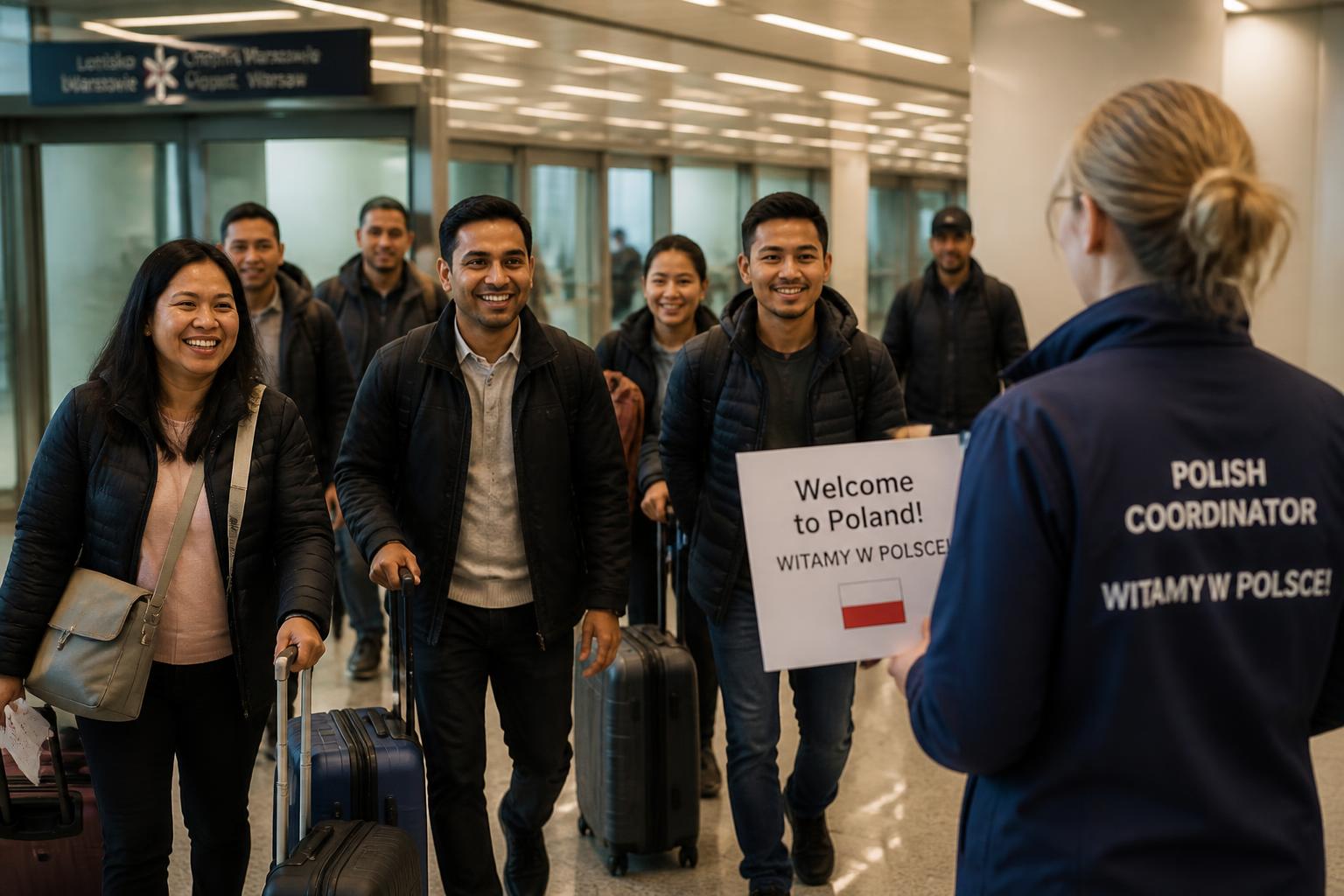
Every group is met at the airport by a coordinator who speaks the workers' language. Below are frames from arrivals, interviews and first days in Bulgaria.

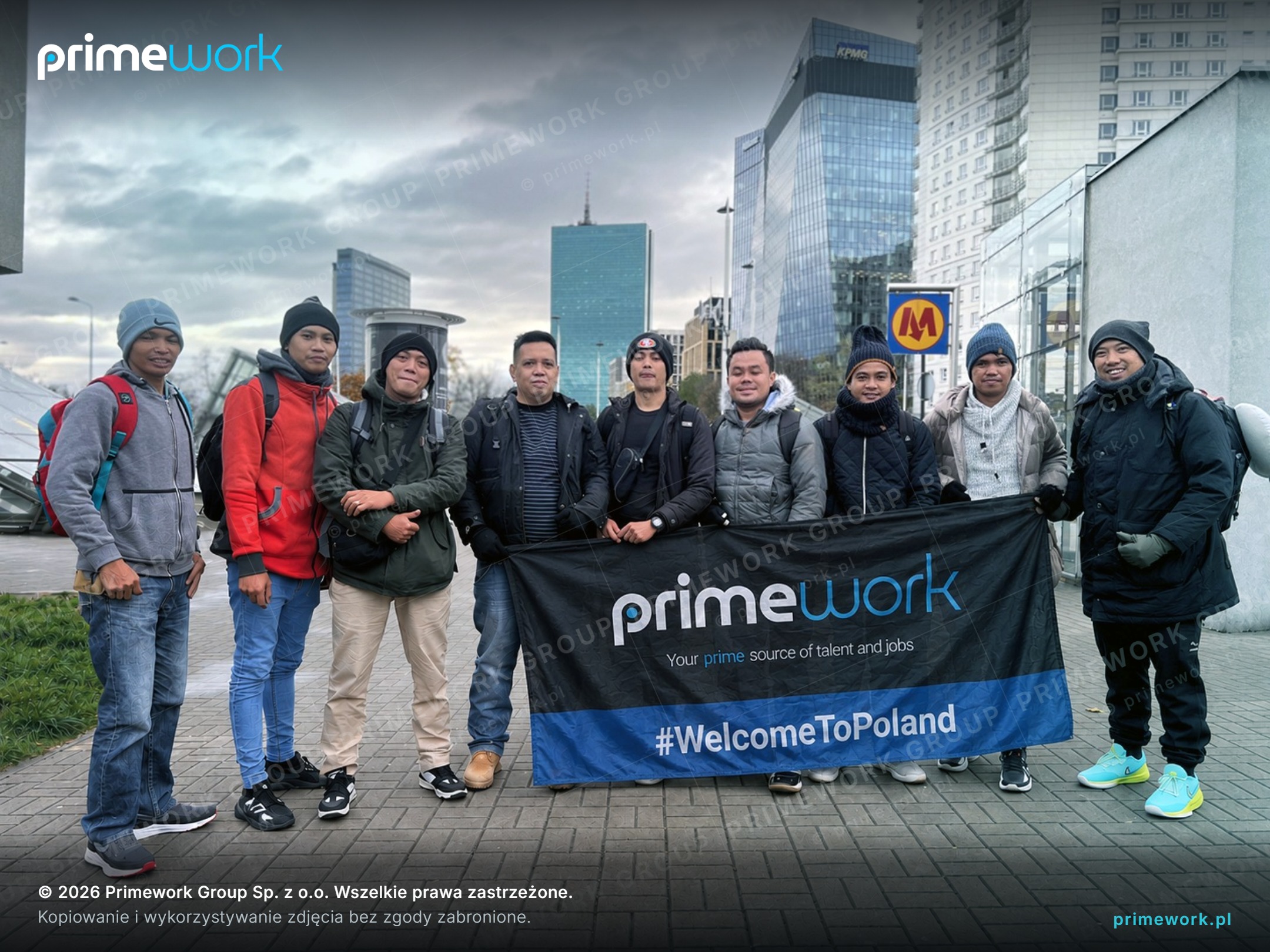
A group of Asian workers with a Primework #WelcomeToPoland banner in central Sofia Arrival photos

A group of workers from Asia after arriving in Sofia

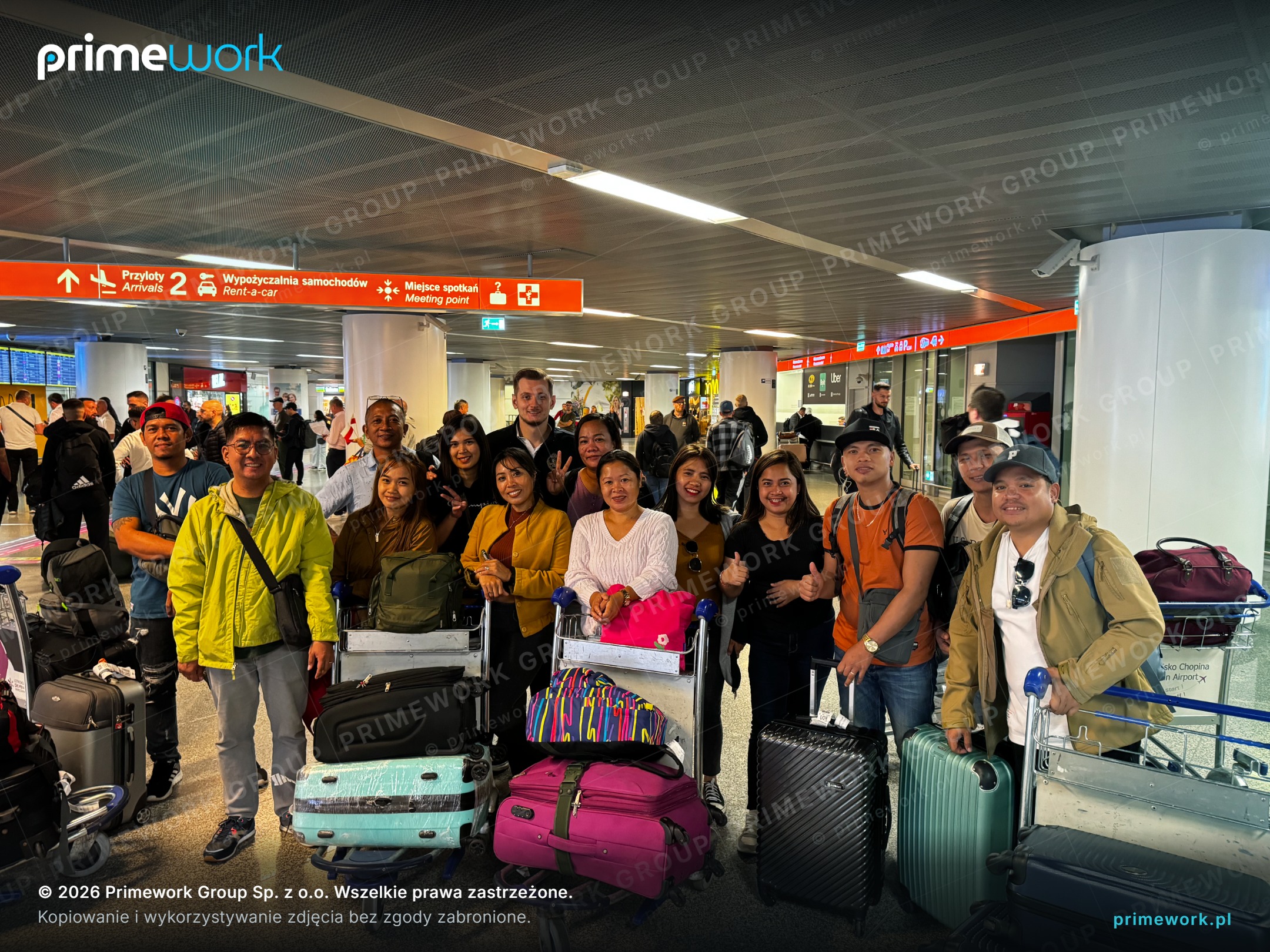
Workers from Asia with luggage in the arrivals hall of Sofia Chopin Airport

A group of Asian workers arriving at Sofia Chopin Airport

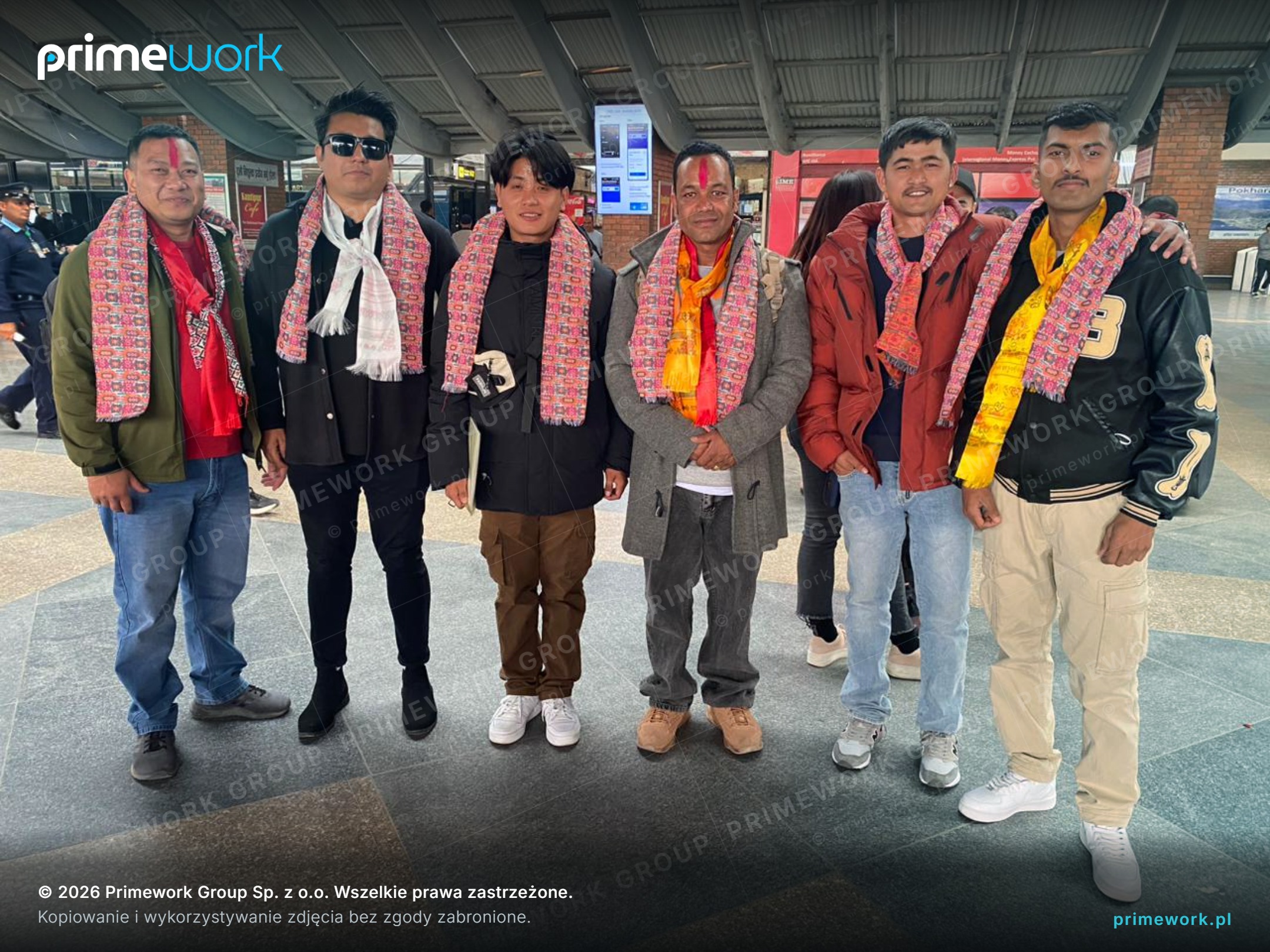
A group of Asian candidates wearing traditional scarves before flying out to work in Bulgaria

Candidates from Asia before departure for Bulgaria, once travel documents are complete

08Practice

Best practices for the first 90 days

Whether the group stays is decided in the first month – not by the hourly rate. Below is what genuinely reduces turnover in our projects.

What works

  • Bilingual workstation and safety instructions – with drawings, not text alone
  • Onboarding by demonstrating the task and having the worker repeat it
  • A buddy from the team for the first two weeks of every batch
  • A predictable roster and payment on the exact date – the strongest retention tool
  • A kitchen in the accommodation and access to a shop with home-country produce
  • A short review at 30 and 90 days with the coordinator present

What to avoid

  • Criticising a worker in front of the whole shift – it costs more than it fixes
  • Assuming that no questions means the instruction was understood
  • Splitting one nationality across several houses in different towns
  • Changing the rate or shift system after the group has arrived
  • Onboarding based solely on Bulgarian-language documents
  • Bringing in 100 people at once without a pilot batch
09FAQ

Frequently asked questions about workers from Asia

Because the scale and stability are different. An Asian candidate arrives for several years, on a specific contract – not for a few months between trips home. Recruitment takes longer, but turnover after arrival is markedly lower and intakes can be planned in batches across the whole year.
Candidates realistically arrive within 1–3 months of signing the contract. The exact timeline depends on the capacity of public authorities, consular services, embassies and the visa system. Candidate selection typically takes 2–4 weeks, with the remaining time used for travel arrangements and accommodation preparation. For larger groups, later batches usually arrive faster once the first one has cleared the process.
The Philippines, India, Nepal, Bangladesh, Sri Lanka, Vietnam, Indonesia and Uzbekistan. We match the country to the role: the Philippines for manufacturing, HoReCa and welding, India for logistics and drivers, Nepal and Bangladesh for production and food processing, Vietnam for precision assembly and welding.
Filipino and Indian candidates speak conversational English – it is an official language in both countries. For Nepal, Bangladesh and Vietnam the standard is basic English, and for larger groups we assign a team leader who speaks the workers' language. Safety and workstation instructions are always prepared bilingually.
The common denominator is respect for the supervisor, loyalty to the employer and genuine willingness to work shifts and overtime. Candidates rarely challenge an instruction openly – if something is unclear they are more likely to stay silent than to ask. Onboarding based on demonstration rather than explanation works best.
You do not need a separate kitchen, but a few points matter. Muslims (Bangladesh, Indonesia, part of India) do not eat pork, Hindus do not eat beef, and flexible breaks during Ramadan help. Kitchen access in the accommodation and a shop selling rice solves 90% of it.
The budget covers recruitment and candidate verification, the flight, airport transfer, accommodation, medicals and safety training, plus the agency fee. Use our cost calculator for an indicative budget, or ask for a precise quotation for your role and headcount before the process starts.
Yes. The Philippines has TESDA, India NCVT and ITI, Nepal CTEVT, Vietnam training centres attached to industrial plants. For technical roles – welders, machine operators, electricians – we can arrange an optional practical test and a work video as a paid add-on.
We do. Airport pickup, transport to the accommodation, a starter pack, and help with local registration, a personal number and a bank account are part of the standard relocation package. A coordinator who speaks the workers' language handles the group's first days.
Yes, and we usually recommend it. A first batch of 10–20 people shows how onboarding, accommodation and shop-floor communication actually work. Subsequent batches run in parallel, so the pilot does not delay the target headcount.
A replacement guarantee is written into the contract. In practice a move to a different position within the plant is usually enough – after two weeks it is clear who works better at a machine and who in packing or the warehouse.
Yes. Pay and other employment conditions must be no worse than for Bulgarian employees in a comparable role – we build this into every contract we help arrange.
Request recruitment
Direction: Asia

Let's build your team from Asia.

We reply within 48 hours with a recommended country, a batch schedule and a full per-worker cost calculation – no obligation.